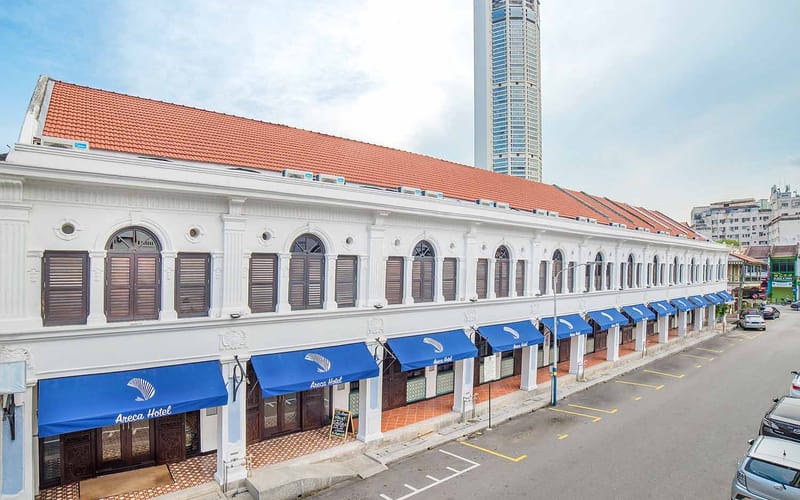
Areca Hotel Penang
Philanthropist Khoo Sian Ewe's 1920s Sino-Portuguese shophouses, reborn
Transparency
Why This Score
How each of the nine Heritage Hotel Index dimensions was evaluated.
Heritage & Authenticity
40% of HHIReview pending
Review pending
Review pending
Guest Experience
35% of HHIReview pending
Review pending
Review pending
Operational Excellence
25% of HHIReview pending
Review pending
Review pending
About the Property
Housed in a row of 1920s Sino-Portuguese shophouses once belonging to Khoo Sian Ewe, a prominent Penang philanthropist, Areca Hotel carries the architectural legacy of one of George Town's most civic-minded families. The ornate plasterwork facades and internal courtyard arrangement of these Straits Chinese commercial premises have been preserved and adapted, offering guests direct residence within the UNESCO World Heritage Site's most intact streetscape.
Original Purpose
Shophouses of philanthropist Khoo Sian Ewe
Highlights
History Timeline
Penang is formally incorporated into the Straits Settlements, cementing George Town as a regional commercial hub and spurring construction of Sino-Portuguese shophouses along its main thoroughfares.
Philanthropist and community leader Khoo Sian Ewe acquires the shophouse row, using the premises for business and community welfare activities that earn him widespread respect in the Hokkien community.
The current Sino-Portuguese shophouse structure is built, featuring characteristic five-foot-ways, ornate plasterwork facades, and a central light-well courtyard typical of prosperous merchant homes.
Japanese forces land in northern Malaya; George Town falls with minimal resistance, and many shophouses including this block are repurposed during the occupation years.
George Town receives UNESCO World Heritage status; the Khoo Sian Ewe shophouses fall within the protected core zone, making sympathetic restoration a prerequisite for any change of use.
Areca Hotel opens following careful conservation works that retained original timber staircases, Peranakan ceramic tiles, and the decorative plaster frieze on the street facade.