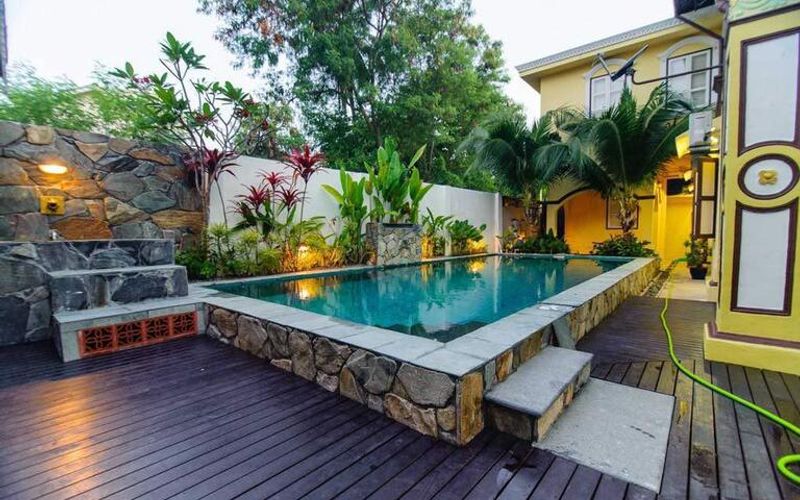
Casugria Dutch Residence 1810
The Dutch acting Governor's 1810 Malacca villa, two centuries still standing
Transparency
Why This Score
How each of the nine Heritage Hotel Index dimensions was evaluated.
Heritage & Authenticity
40% of HHIReview pending
Review pending
Review pending
Guest Experience
35% of HHIReview pending
Review pending
Review pending
Operational Excellence
25% of HHIReview pending
Review pending
Review pending
About the Property
One of the oldest surviving residential structures in Malacca, this 1810 Dutch Colonial villa was originally the private residence of the acting Dutch Governor of the city. Its thick masonry walls, shuttered sash windows and symmetrical European plan recall the final decades of Dutch rule over the Straits Settlements — a period of commerce, diplomacy and cultural exchange that shaped the fabric of present-day Malacca.
Original Purpose
Villa of Dutch acting Governor of Malacca
Highlights
History Timeline
The VOC captures Malacca; Dutch administrators begin constructing official residences and villas across the city, establishing the architectural template that would define colonial Malacca for two centuries.
Britain temporarily occupies Malacca to prevent it falling to Napoleonic France; the Dutch colonial villa that will become Casugria is already standing as one of the established residential compounds outside the city centre.
The villa is substantially rebuilt and expanded under the Dutch acting Governor of Malacca, featuring thick rendered masonry walls, a colonnaded verandah, and formal gardens typical of Dutch colonial residential architecture.
Malacca is formally ceded to Britain as part of the Anglo-Dutch Treaty; the villa passes to successive British administrators while retaining its Dutch colonial structure and formal layout.
Malacca UNESCO inscription highlights the 1810 villa as one of the oldest and most intact surviving Dutch residential structures in the city, prompting a detailed conservation assessment.
Casugria Dutch Residence 1810 opens as a boutique hotel after meticulous restoration, preserving the colonial-era masonry, original room proportions, and landscaped compound of this rare 215-year-old building.