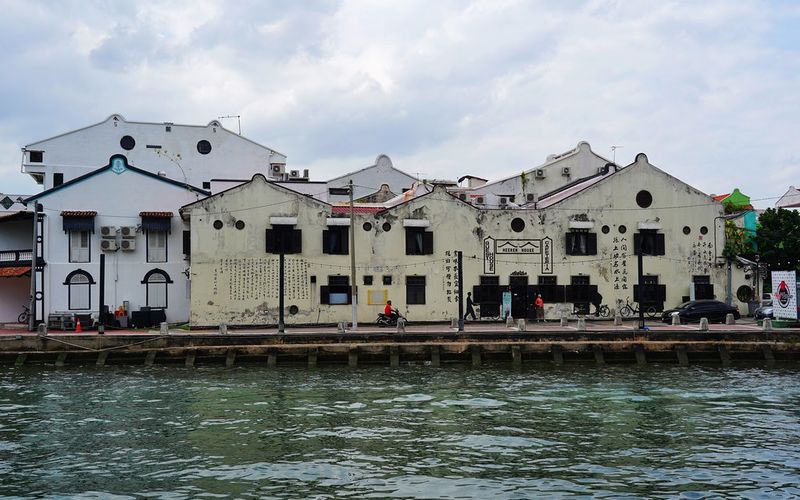
Heeren House
A 1710 VOC-era warehouse still anchoring Heeren Street's Malacca trading axis
Transparency
Why This Score
How each of the nine Heritage Hotel Index dimensions was evaluated.
Heritage & Authenticity
40% of HHIReview pending
Review pending
Review pending
Guest Experience
35% of HHIReview pending
Review pending
Review pending
Operational Excellence
25% of HHIReview pending
Review pending
Review pending
About the Property
Among the oldest Dutch-period commercial structures surviving on Heeren Street — the trading axis of colonial Malacca — this early-18th century warehouse dates to the years of VOC rule over the Straits. Its characteristic narrow facade, deep interior plan and riverside orientation reflect the mercantile logic of a city built on water-borne trade. Thick lime-washed walls, original timber ceiling joists and an inner light well have been preserved through careful restoration.
Original Purpose
Dutch-period warehouse and trading house
Highlights
History Timeline
The Dutch VOC takes control of Malacca; Heeren Street (meaning Gentlemen Street) is developed as the premier address for Dutch merchants who construct warehouses and trading houses along the Malacca River.
One of the earliest Dutch-period trading warehouses is constructed on Heeren Street, featuring the characteristic step-gable roofline, thick load-bearing walls, and river-facing loading bays of Dutch colonial commercial architecture.
Malacca passes to British administration under the Straits Settlements; the Heeren Street warehouse is converted from Dutch trading use to Straits Chinese merchant functions, with Peranakan decorative elements added to the facade.
Japanese forces occupy Malacca; the historic Heeren Street warehouses are pressed into use as military supply stores, with the 1710 building surviving the war with its principal fabric intact.
Malacca and George Town are jointly inscribed as UNESCO World Heritage Sites; the 1710 Heeren Street warehouse is recognised as one of the oldest surviving commercial buildings in the city.
Heeren House opens as a heritage hotel in the restored Dutch warehouse, preserving the original step-gable facade, heavy timber floor beams, and riverside orientation of the 300-year-old structure.