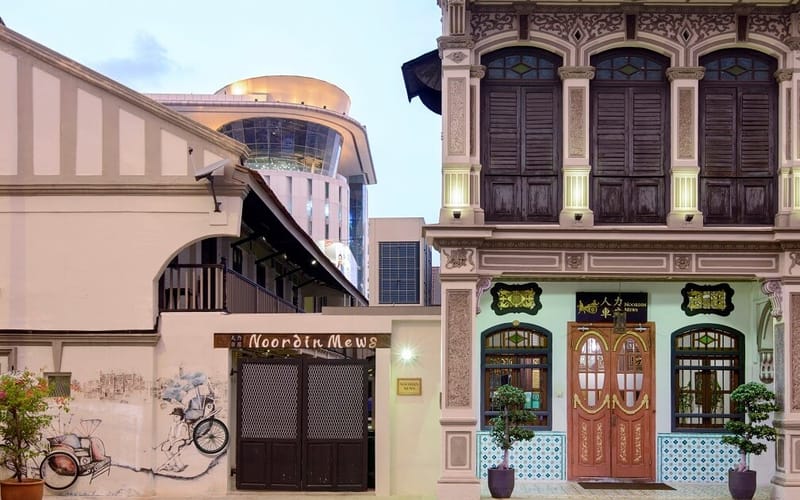
Noordin Mews
Peranakan servants' quarters behind George Town's grandest 1920s shophouse facades
Transparency
Why This Score
How each of the nine Heritage Hotel Index dimensions was evaluated.
Heritage & Authenticity
40% of HHIReview pending
Review pending
Review pending
Guest Experience
35% of HHIReview pending
Review pending
Review pending
Operational Excellence
25% of HHIReview pending
Review pending
Review pending
About the Property
Converted from 1920s servants' quarters and trishaw storage attached to a Peranakan merchant compound, Noordin Mews offers an intimate window into the working life behind George Town's grand shophouse facades. The Straits Eclectic architecture — decorative friezes, narrow light wells and original ceramic floor tiles — has been sensitively restored into a sequence of characterful rooms and courtyards within the UNESCO World Heritage core.
Original Purpose
Servants quarters and trishaw storage for Noordin Street families
Highlights
History Timeline
Jalan Noordin develops as a prosperous residential lane in George Town following the formation of the Straits Settlements, housing the domestic and working-class support structures of wealthy Peranakan households.
Peranakan merchant families on Jalan Noordin construct servants quarters and trishaw storage sheds behind their main townhouses, creating a network of ancillary lanes serving the upper-class households.
The existing servants quarters and trishaw storage structure is rebuilt in the Straits Eclectic style, with decorative plasterwork and glazed roof tiles added to the previously plain utility buildings.
Japanese occupation of George Town forces many Jalan Noordin residents to flee; the ancillary buildings are abandoned or used for military storage during the three-and-a-half-year occupation.
George Town UNESCO inscription draws attention to the rare surviving back-lane ancillary buildings of Jalan Noordin as overlooked elements of the heritage townscape.
Noordin Mews opens after transforming the 19th-century servants quarters and trishaw storage into a characterful boutique hotel experience, retaining the intimate scale and exposed brickwork of the original structure.